Light the room
Play in a well-lit area. Never game in a fully dark room — screen flashes are far more intense against darkness. At venues, we keep house lighting on at all times.
The official Esports Academy health and safety guidance for every tournament and session we run — online, at home, or in a packed venue. Event organisers and schools are welcome to link directly to this page.
A very small percentage of people may experience a seizure or blackout when exposed to certain kinds of flashing lights, rapidly changing images or geometric patterns. This can happen while playing video games or while watching them — on a monitor, a console, a projector or a cinema-sized screen.
Even people who have never had a seizure may have an undiagnosed condition that can cause photosensitive epileptic seizures. The first sign is often at a screen.
Stop playing or watching immediately and seek medical advice if you or anyone near you experiences any of the following:
Parents and guardians: watch your children while they play, and ask them about the symptoms above — children and teenagers are more likely than adults to experience these seizures. If you or any relative has a history of seizures or epilepsy, consult a doctor before playing.
These rules apply to every ESA tournament and session and are read out at the start of every event.
Play in a well-lit area. Never game in a fully dark room — screen flashes are far more intense against darkness. At venues, we keep house lighting on at all times.
Stay at least an arm's length from a monitor, 2 metres from a TV and further again from projector and cinema screens. Smaller screen, greater distance, lower risk.
Take a 10–15 minute break away from all screens every 45–60 minutes of play — even if you don't feel you need it. Our moderators enforce break rotations at every event.
Drink water regularly and don't compete on an empty stomach. Dehydration and low blood sugar both lower your seizure threshold and your reaction time.
Do not play when you are drowsy, fatigued or unwell. Tiredness significantly increases seizure risk — sleep beats scrims, every time.
If you've ever had a seizure, epilepsy diagnosis or photosensitivity, tell us at registration (it stays confidential). We'll seat you appropriately and brief our floor staff.
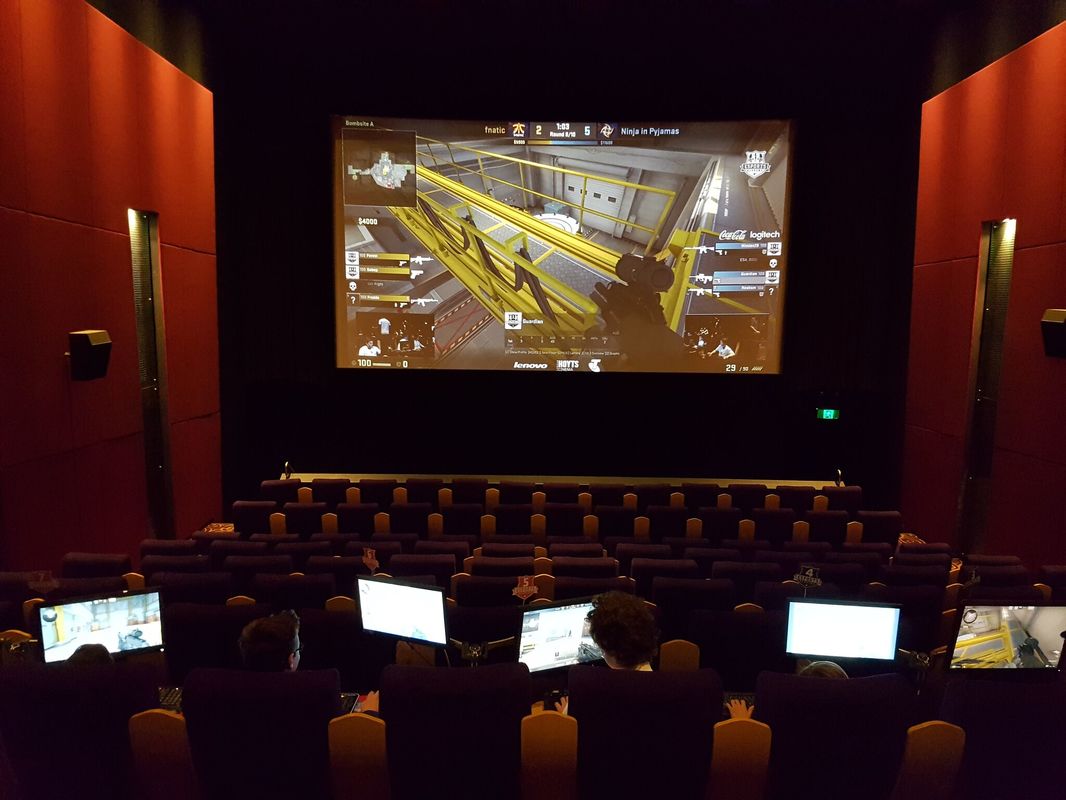
Our arena events can put hundreds of people on consoles in a single hall, cinema or gymnasium — dozens of screens, one giant broadcast. At that scale, health and safety is engineered into the event, not bolted on:
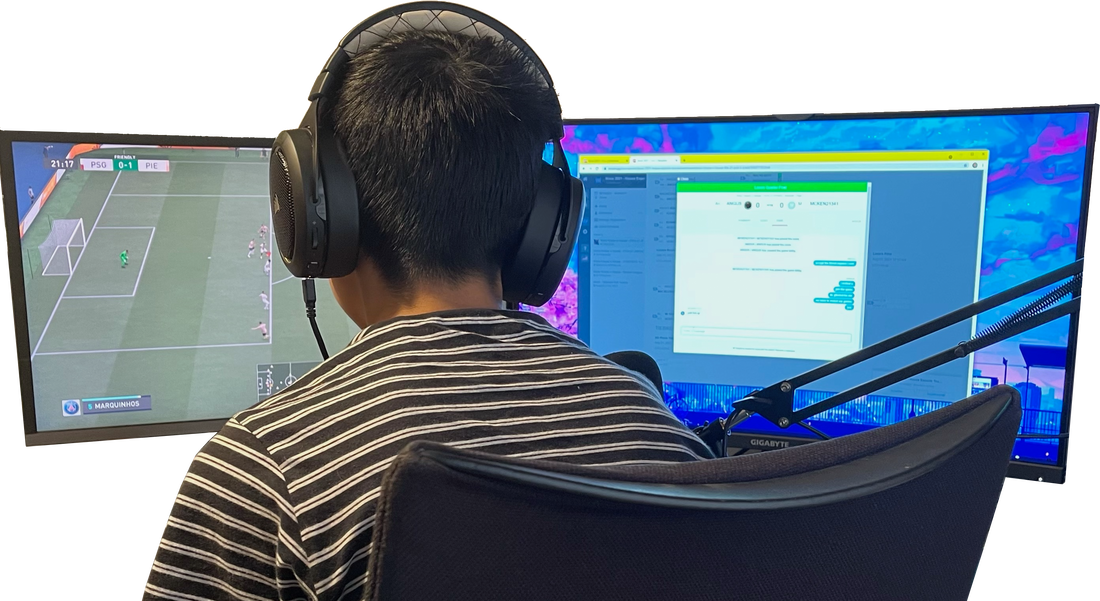
When tournaments run online — including for schools in regional and remote areas — the same protections travel with them:
Every title we commonly run at tournaments and sessions, with its Australian classification and what to know about its visual effects. This applies whether the event is online, in a classroom, or hundreds-strong in a hall.
| Game | AU Classification | Flash / visual intensity | ESA event notes |
|---|---|---|---|
| EA Sports FC / FIFA | G | Low–moderate — stadium floodlights, camera flashes, replay transitions | All ages. Our most-run school title. Standard break rotations apply. |
| Rocket League | G | Moderate — boost trails, goal explosions, arena light shows | All ages. Goal-explosion and camera-shake effects are reduced in settings on ESA rigs where available. |
| Minecraft | PG | Low–moderate — lightning storms, TNT blasts, portal shimmer | Younger brackets. Session length is the main risk — enforced breaks and moderated servers only. |
| Fortnite | M | Moderate–high — storm flashes, weapon fire, bright emote and event effects | Private, moderated lobbies only. 13+ with parental consent per platform account rules; ESA age brackets apply. |
| Valorant | M | High — rapid ability flashes (flash grenades), high-contrast ability effects | Senior brackets (15+ at ESA events). Highest photosensitivity caution of our titles — extra distance and mandatory breaks enforced. |
Classifications shown per the Australian Classification Board at the time of review and may change — verify any title at classification.gov.au. Titles not listed here are risk-assessed before being added to any ESA event, and game-specific warnings are included in that event's registration pack.
Playing with controllers, keyboards and mice for extended periods can cause discomfort or injury to hands, wrists, arms, neck and shoulders.
Long screen sessions can cause dry eyes, blurred vision and headaches.
Tournament comms and venue PAs are loud environments.
Fast camera movement in 3D titles can cause dizziness or nausea in some players — more common on very large screens where the image fills your field of view.
Esports should add to school, sport and family life — not replace them. ESA fixtures are scheduled with hard start and end times, and our moderators close lobbies when the session ends. Parents can view fixture schedules at registration, and we support any family's screen-time limits without penalty to the player.
Our venue staff are briefed on this procedure. If it happens at home or in your venue:
Call 000 if: it's their first seizure · it lasts more than 5 minutes · a second seizure follows · they're injured · breathing doesn't return to normal · it happens in water.
Afterwards: the player sits out the rest of the session (no exceptions), parents/guardians are contacted immediately for minors, and an incident report is completed. Medical clearance is required before returning to ESA play.
Libraries, councils, schools and venues co-hosting an ESA event: this page is your official health-and-safety reference. Link to it from your event listing, ticketing page or program — it covers the photosensitivity warning and all player health guidance for the titles being played.
This page provides general guidance and is not medical advice. Players with any medical condition should consult their doctor before competing. This notice is reviewed regularly — last reviewed July 2026.